
Exhibition at The Carpenter Center, Harvard University Oct. 8 - Dec. 22, 2023
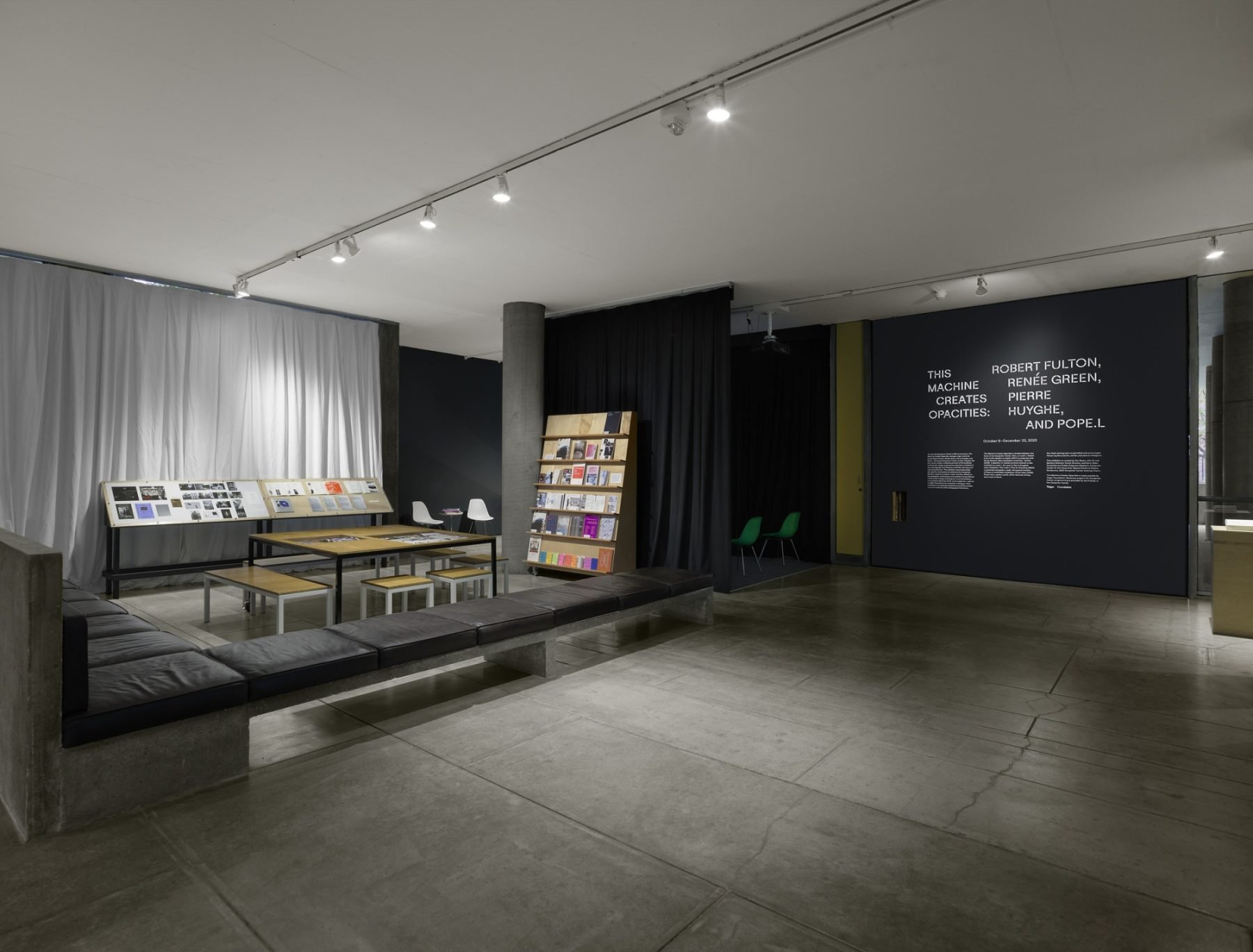
This Machine Creates Opacities: Robert Fulton, Renée Green, Pierre Huyghe, and Pope.L
On the occasion of the Carpenter Center’s 60th anniversary, This Machine Creates Opacities restages four major works by artists Robert Fulton, Renée Green, Pierre Huyghe, and Pope.L that examine the ways buildings choreograph, shape, and control social life, learning, and cultural structures. With its title borrowed from statements the artist Pope.L made about navigating the Carpenter Center building upon an invitation to make a new commission, the exhibition reflects on the program, affect, history, and various complexities of Le Corbusier’s iconic architecture. Each one of the included film-based works was created directly in response to the Carpenter Center as an institutional site and explores architecture through the lens of experimental cinematography and the expansive formal, technological possibilities of video installation to excavate a building’s aesthetic and social functions. This Machine Creates Opacities is divided between two floors of the building and presents Pierre Huyghe’s video This is Not a Time for Dreaming (2004), alongside documentation of the performance and sculptural elements from Pope.L’s Corbu Pops (2009) on level 3, while Reality’s Invisible by Robert Fulton (1971), and Renée Green’s Americas: Veritas (2018) are screened on level 1.
Reality’s Invisible
Robert Fulton’s 16mm film Reality’s Invisible (1971)—made while the pioneering cinematographer was teaching in the Department of Visual and Environmental Studies at the Carpenter Center (now the Department of Art, Film, and Visual Studies)—layers candid interviews with students, faculty lectures, student artworks, and swooping, lingering shots of the building’s architecture. Fulton edited the sounds and images of his film to meld together in what he termed “tones,” which echo an almost psychedelic immersive experience. The intimate yet frenetic footage captures classroom and studio activities along with students’ intellectual and political concerns, creating a disorienting, sometimes dark portrait of a building and the social, pedagogical communities that it choreographs. Fulton, also an accomplished aerial cinematographer, would tragically pass away in a private plane accident in 2002, whereupon The Film Study Center at Harvard University established The Robert E. Fulton III Fellowship in Nonfiction Filmmaking in his honor.